Savage 93R17 (.17 HMR) · Volume 2
The .17 HMR — Speed, Wind, and What It Does When It Arrives
Hornady's necked-down magnum from the makers' own tables: a flatter path than the .22 WMR, no more energy, and a wind advantage that is real but narrower than the reputation
2.1 The .17 HMR — Speed, Wind, and What It Does When It Arrives
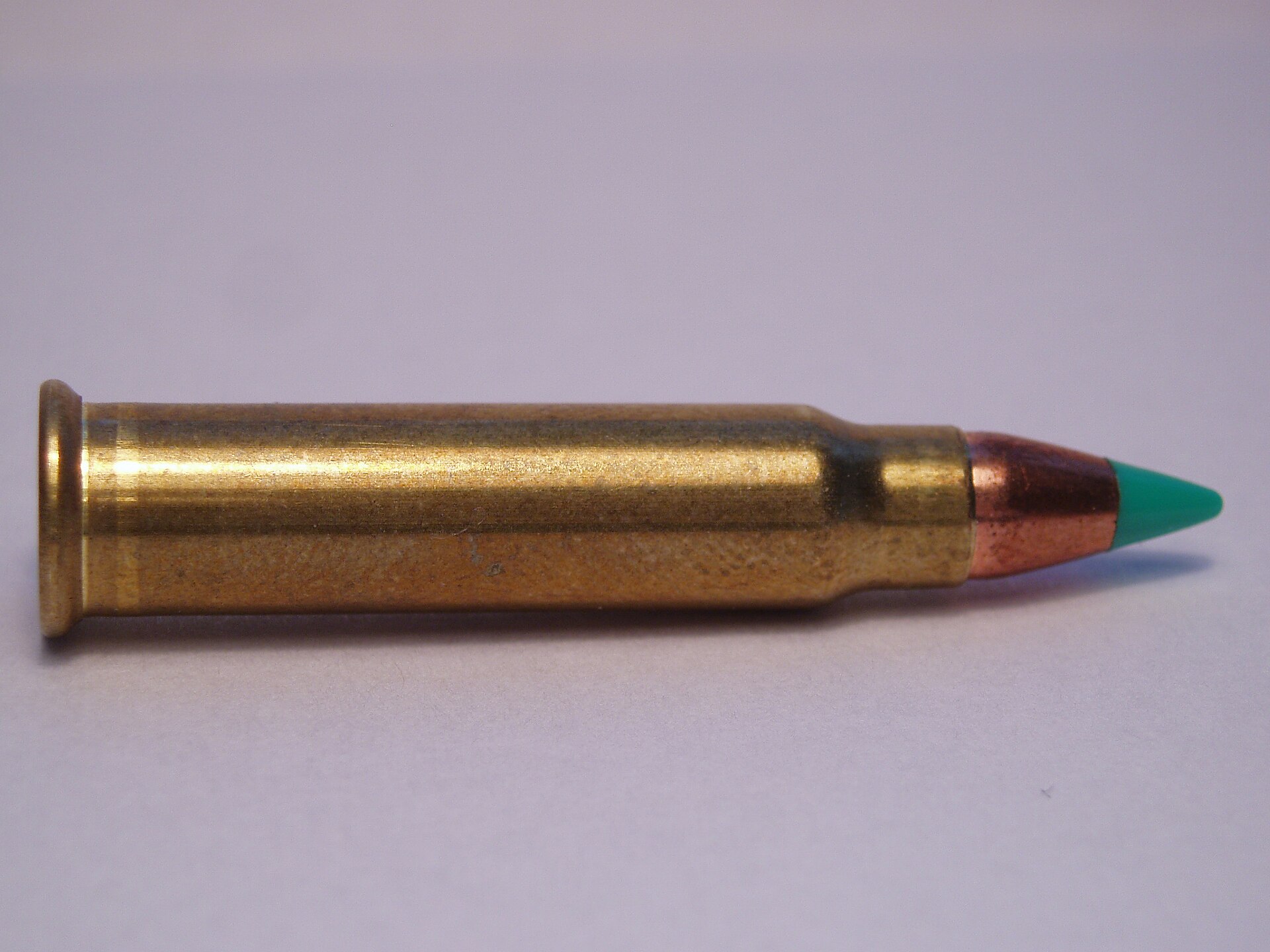
The .17 HMR is usually sold on three claims: that it is extraordinarily flat, that it bucks the wind far better than the rimfires it replaced, and that it is devastating on small animals. All three are broadly true. None is true in the unqualified form in which it is usually repeated, and the qualifications decide how the rifle documented here should be used.
This volume works from the ammunition makers’ own published tables rather than from secondary summaries, and it computes wind drift directly from those tables rather than quoting a figure of unknown origin. The general rimfire material, including how rimfire ammunition is made, why it cannot be reloaded, and the whole .22 family from BB Cap to WMR, is already covered in the hub’s .22 Rimfire dive and is not repeated.
2.1.1 What the cartridge is
Hornady Magnum Rimfire. Savage’s own service desk spells the initials out.1 Hornady introduced the cartridge in 2002 by necking the .22 WMR case down to take a .17-calibre bullet, and followed it in 2004 with the .17 HM2, the same idea applied to a .22 LR Stinger case. The hub’s .22 Rimfire dive records both, and records the part that matters commercially: the HMR succeeded and the HM2, forced to compete with .22 LR on price, did not.2
Three consequences follow from the parentage.
- It is a rimfire. The priming compound is spun into the fold of the rim, the firing pin crushes the rim to fire it, and the case cannot be reloaded. Everything the .22 Rimfire dive says about rimfire manufacture, rim-thickness variation and ignition applies here.
- It shares the .22 WMR’s case head and much of its body. That is why Savage builds one Model 93 action for both cartridges (Volume 1), and why a magazine and a bolt face that handle one handle the other.
- It does not interchange with anything. Savage is blunt about the two .17 rimfires: “17HMR and 17HM2 are not the same caliber … You should never use a 17HMR round in a 17HM2 firearm or vise versa.”1 The only cartridge to put in the rifle is the one stamped on its barrel.
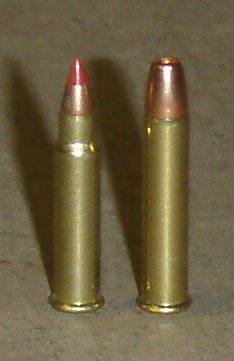
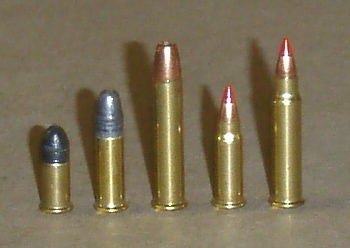
2.1.2 The loads, from the makers’ own pages
Every figure below comes from the maker’s own product page, read on 19 September 2026.34 Hornady states its test barrel length; CCI’s pages do not.
Table 1 — 2.2 The loads, from the makers' own pages
| Load | Bullet | Muzzle velocity | Muzzle energy | 100 yd | Maker’s BC | Test barrel |
|---|---|---|---|---|---|---|
| Hornady Varmint Express, item 83170 | 17 gr V-MAX (polymer tip) | 2,550 fps | 245 ft·lbf | 1,902 fps / 137 ft·lbf | not stated | 24 in |
| CCI A17 Varmint Tip | 17 gr tipped | 2,650 fps | 265 ft·lbf | 2,000 fps / 151 ft·lbf | .128 | not stated |
| CCI Full Metal Jacket | 20 gr FMJ | 2,375 fps | 250 ft·lbf | 1,776 fps / 140 ft·lbf | .130 | not stated |
| For comparison: Hornady .22 WMR, item 83202 | 30 gr V-MAX | 2,200 fps | 322 ft·lbf | 1,454 fps / 141 ft·lbf | not stated | 24 in |
| For comparison: CCI Target Mini-Mag .22 LR | 40 gr copper-plated round nose | 1,235 fps | 135 ft·lbf | 998 fps / 88 ft·lbf | .130 | not stated |
Three points in that table deserve comment.
The test barrel is not this rifle’s barrel. Hornady’s 2,550 fps is from a 24-inch test barrel. Every thumbhole 93R17 was catalogued at 21 inches (Volume 1), and the rifle documented here is recorded at 20. A shorter barrel will give lower velocity; how much lower in this rifle has not been measured, and no figure is offered for it. A chronograph string from the rifle itself is the only honest number, and it is owed.
CCI’s A17 load is a semi-automatic load. CCI says it “literally built this 17 HMR load around the A17 rifle from Savage Arms”, “optimized for feeding and function in the semi-automatic rifle”, and that it “produces muzzle velocities 100 fps faster than other 17 HMR loads with the same bullet weight.”4 It fires perfectly well in a bolt action. The reason it exists is the subject of Volume 3.
Savage tests with a 20-grain bullet. Savage’s manual names the load it uses “for targeting evaluation” in its .17 HMR rifles: Hornady 20 grain XTP.5 That is worth knowing for two reasons. It says Savage regards its 1-in-9 twist as adequate for the heavier .17 bullets; and it names the ammunition against which a factory accuracy expectation was formed. Hornady’s page for that load was not consulted, so its velocity is not given here.
2.1.3 Trajectory: flatter, not stronger
Hornady publishes both its .17 HMR and its .22 WMR V-MAX loads with the same presentation: a 100-yard zero and a sight line 1.5 inches above the bore.3
Table 2 — 2.3 Trajectory: flatter, not stronger
| Muzzle | 100 yd | 200 yd | |
|---|---|---|---|
| .17 HMR 17 gr V-MAX path | −1.5 in | 0 | −8.5 in |
| .22 WMR 30 gr V-MAX path | −1.5 in | 0 | −15.7 in |
| .17 HMR velocity retained | 2,550 fps | 1,902 fps (75%) | 1,379 fps (54%) |
| .22 WMR velocity retained | 2,200 fps | 1,454 fps (66%) | 1,026 fps (47%) |
| .17 HMR energy | 245 ft·lbf | 137 ft·lbf | 72 ft·lbf |
| .22 WMR energy | 322 ft·lbf | 141 ft·lbf | 70 ft·lbf |
Read the last two rows together. At 100 and 200 yards the two V-MAX loads carry the same energy, within a few foot-pounds. The .17 starts with less, loses less, and arrives at the same place. What it buys is not more energy downrange; it is a path that falls about half as far in the second hundred yards, which is the difference between a centre hold and a guess on a small target at an uncertain range.
The comparison is with the light, fast 30-grain WMR load. The hub’s .22 Rimfire dive records heavier WMR loads — 40 grains at 1,875 fps and 312 ft·lbf, 50 grains at 1,530 fps and 260 ft·lbf — so the heavier WMR bullets start with more energy than either V-MAX. Their downrange figures were not checked against a maker’s table and are not compared here.2 The .17 HMR is the flat-shooting choice, not the hard-hitting one.
2.1.4 Wind: the real advantage, and its edge
The reputation is that the .17 HMR, with its tiny bullet, is blown about. The opposite reputation also circulates: that it “bucks the wind”. Both can be tested against the makers’ own velocity tables.
The method. Wind deflection is governed by lag time: the difference between the bullet’s actual time of flight and the time it would take at its muzzle velocity with no drag. Drift equals the crosswind speed multiplied by that lag. The hub’s Ballistics Overview dive develops the rule; it is used here, not re-derived. Time of flight was integrated from each maker’s own velocity-versus-range table, with no ballistic coefficient and no drag model assumed, so the result is only as good as the maker’s table and is reported only inside the range the table covers.6
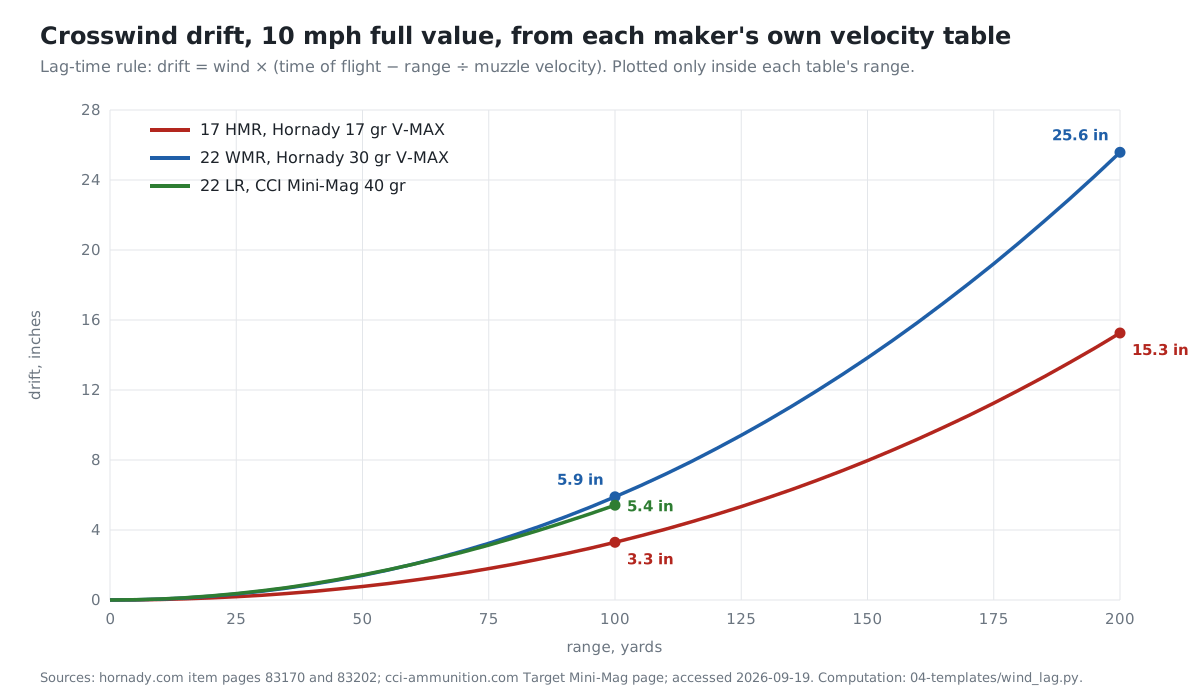
Table 3 — 2.4 Wind: the real advantage, and its edge
| 10 mph full-value crosswind | .17 HMR, Hornady 17 gr V-MAX | .17 HMR, CCI A17 | .17 HMR, CCI 20 gr FMJ | .22 WMR, Hornady 30 gr V-MAX | .22 LR, CCI Mini-Mag 40 gr |
|---|---|---|---|---|---|
| 50 yd | 0.8 in | 0.7 in | 0.8 in | 1.4 in | 1.4 in |
| 100 yd | 3.3 in | 3.0 in | 3.5 in | 5.9 in | 5.4 in |
| 150 yd | 8.0 in | — | — | 13.8 in | — |
| 200 yd | 15.3 in | — | — | 25.6 in | — |
Three findings, each stated with its limit.
1. The .17 HMR’s wind advantage is real and large. At 100 yards it drifts roughly six-tenths as far as either the .22 WMR V-MAX or a .22 LR Mini-Mag, and at 200 yards about six-tenths as far as the WMR. The heavier 20-grain FMJ drifts slightly more than the 17-grain V-MAX, because it starts slower; in this cartridge the lighter, faster bullet wins over the range the tables cover.
2. The fast .22 WMR load drifts slightly more than a .22 LR at 100 yards. On the makers’ own tables, the 30-grain WMR V-MAX drifts 5.9 inches against the Mini-Mag’s 5.4. That looks wrong until the velocity table is read: the WMR load loses a third of its velocity in the first hundred yards (2,200 to 1,454 fps), so its lag time grows faster than that of a .22 LR that started slow and slowed less. Muzzle velocity is not the variable; lag time is. Limits: two makers, a Hornady 24-inch barrel against an unstated CCI one, and a three-point velocity table for the WMR. Heavier WMR loads were not modelled, because no maker’s velocity table for them was obtained. The finding is that this particular fast WMR load is no better than .22 LR in the wind at 100 yards, not that the WMR as a cartridge is worse.
3. The .22 LR figure is corroborated independently. The 5.4 inches computed here from CCI’s own table matches the aggregate figure the hub’s .22 Rimfire dive quotes for .22 LR at 100 yards.2 Two different routes to the same number is the best available check on the method.
On the 1,000-yard figure. The .22 Rimfire dive, quoting an aggregate source that states no assumptions, gives the .17 HMR a larger drift than the .22 LR at 1,000 yards. Nothing here contradicts that: well past its supersonic range the tiny .17 bullet may well lose more. It is simply irrelevant to a rifle whose useful range is measured in low hundreds of yards, and inside that range the makers’ own numbers put the .17 HMR well ahead.
What 3.3 inches means in practice. A 10 mph crosswind is an ordinary day. At 150 yards the HMR moves about 8 inches; a ground squirrel’s vital zone is a fraction of that. The .17 HMR does not remove the need to read wind at rimfire ranges; it moves the distance at which wind becomes the dominant error outward by perhaps half again, compared with the .22 WMR V-MAX.
2.1.5 What it does when it arrives
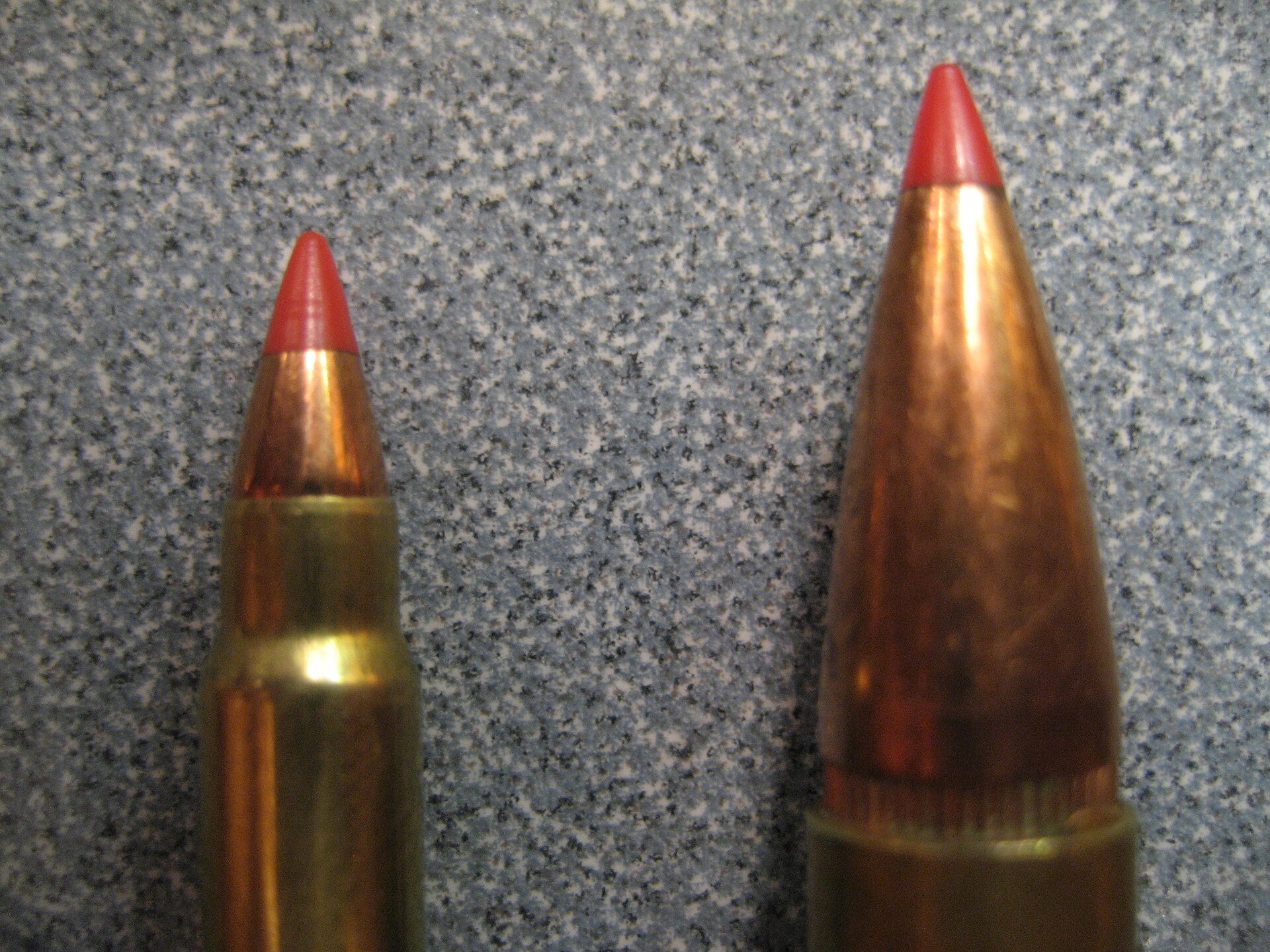
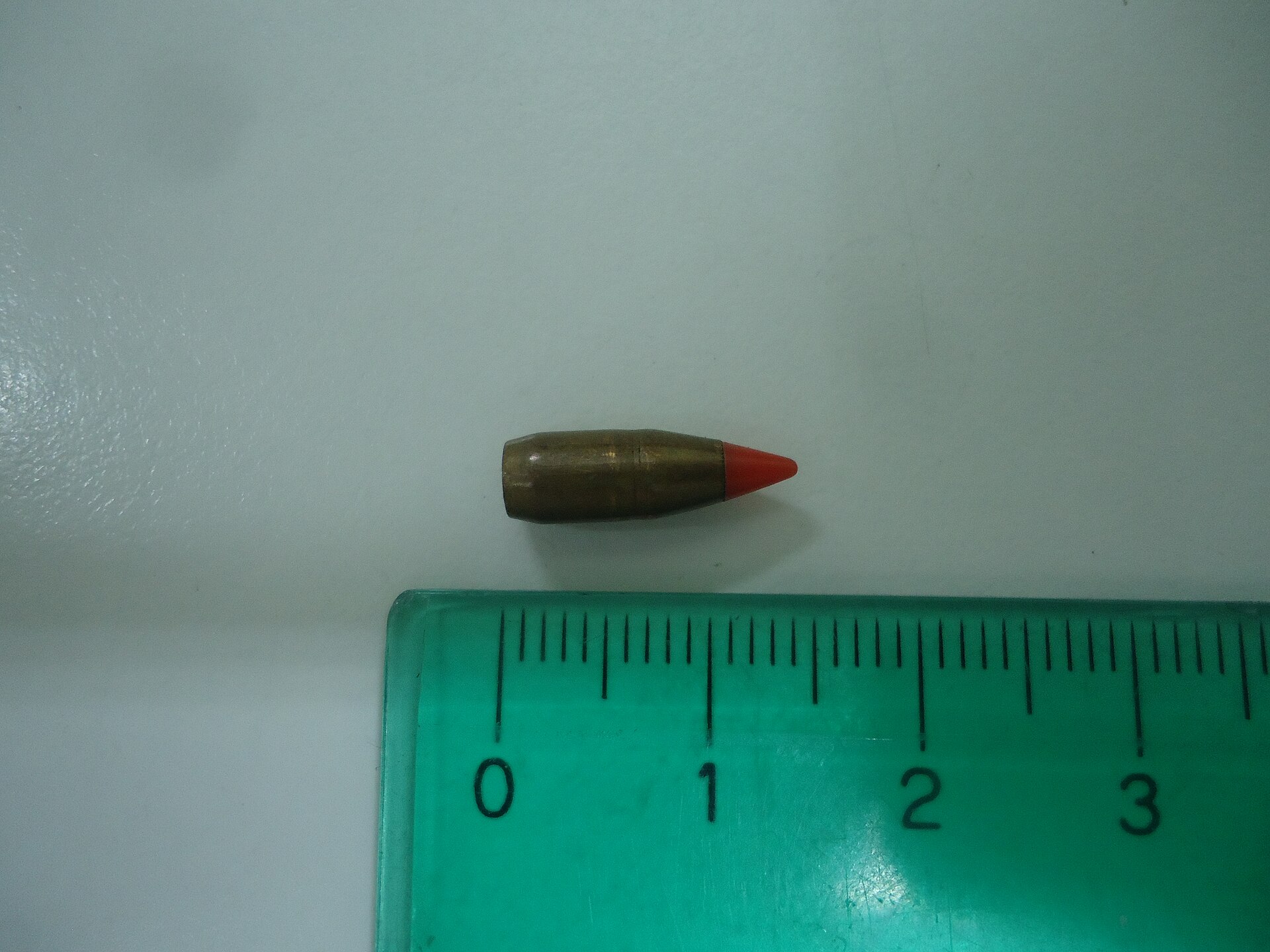
The V-MAX is a polymer-tipped, thin-jacketed varmint bullet built to expand immediately. At .17 HMR velocities on a small animal, that means fragmentation. The hub’s .22 Rimfire dive puts it concisely: the HMR is “explosively destructive on small animals”, and “for the same reason, the wrong choice if you want to eat what you shoot.”2
Varmints. This is the niche the cartridge was built for: ground squirrels, prairie dogs, woodchucks and similar animals at ranges where a .22 LR’s trajectory becomes a guessing game. The flat path from §2.3 and the drift from §2.4 are exactly what that work needs.
Pelts. A fur hunter’s problem is the opposite of a varmint shooter’s. An expanding bullet that fragments inside a fox or a raccoon leaves an exit wound or a mess of small holes, which lowers the value of the pelt. The ammunition makers’ answer is the full-metal-jacket load. CCI markets its 20-grain FMJ for small game on exactly this reasoning: it “punches clean holes to minimize meat loss”, with “no expansion”.4 CCI frames that for meat; the same mechanism, a bullet that does not open up, is what preserves a hide. How much a given bullet actually reduces pelt damage on a given animal was not found in any primary source consulted; it is a reasoned consequence of the bullet design, not a measured result.
What it is not. Muzzle energy of 245 to 265 ft·lbf from a 17-grain bullet puts the cartridge in the same class as the .22 WMR and far below any centrefire deer cartridge. This dive does not treat the .17 HMR as a deer cartridge, and Volume 6 gives the Michigan position only for the game it is actually used on.
2.1.6 Choosing ammunition for this rifle
- Start with the load Savage tests with. Savage’s own targeting load is the Hornady 20-grain XTP.5 If the rifle groups well with it, it is performing as the factory expects.
- Test the 17-grain V-MAX and at least one other maker. Rimfire accuracy is ammunition-specific, and the hub’s .22 Rimfire dive explains why lot-to-lot and maker-to-maker variation is larger than centrefire shooters expect.
- Keep the FMJ for pelts and pots. It flies about as well as the V-MAX (§2.4) and does the opposite thing on arrival.
- There is no subsonic option. Every load in §2.2 leaves the muzzle at more than twice the speed of sound. That bears directly on suppressing the rifle; see Volume 6.
2.1.7 What could not be verified
- This rifle’s muzzle velocity with any load; every published figure is from a 24-inch or unstated test barrel.
- SAAMI maximum average pressure for .17 HMR. The rimfire standard, ANSI/SAAMI Z299.1, was not obtained (the hub’s Headspace dive records the same gap), so no pressure figure is printed.
- Velocity and ballistic data for the Hornady 20-grain XTP, Savage’s targeting load.
- Heavier .22 WMR loads’ wind drift, for want of a maker’s velocity table.
- Measured pelt damage by bullet type.
2.1.8 Bibliography
Footnotes
-
Savage Arms service FAQ, “What does HMR stand for?” (214239743) and “What is the difference between the 17HMR and the 17HM2?” (214238783), both dated 11 April 2013, service.savagearms.com, as archived 2020–2024. ↩ ↩2
-
The hub’s .22 Rimfire dive: Vol 2 (the family; .17 HMR introduced 2002 by Hornady as a .22 WMR case necked to .17; .17 HM2 2004; WMR published loads), Vol 5 (.22 LR 10 mph drift, aggregate 5.4 in at 100 yd; the 1,000-yd comparison), Vol 6 (the .17 HMR as “explosively destructive on small animals”). ↩ ↩2 ↩3 ↩4
-
Hornady, “17 HMR 17 gr V-MAX Varmint Express”, item 83170, hornady.com/ammunition/rimfire/17-hmr-17-gr-v-max; and “22 WMR 30 gr V-MAX Varmint Express”, item 83202, hornady.com/ammunition/rimfire/22-wmr-30-gr-v-max. Both 24-in test barrel; tables at muzzle, 100 and 200 yd. Accessed 2026-09-19. ↩ ↩2
-
CCI product pages: “A17 Tipped Varmint, 17 HMR, 17 Grain”, cci-ammunition.com/rimfire/cci/a17/6-949CC.html; “Full Metal Jacket, 17 HMR, 20 Grain”, cci-ammunition.com/rimfire/cci/full-metal-jacket/6-55.html; “Target Mini-Mag, 22 LR, 40 Grain, Copper Plated Round Nose”, cci-ammunition.com/rimfire/cci/target-mini-mag/6-30.html. Velocity tables to 100 yd and stated BCs. Accessed 2026-09-19. ↩ ↩2 ↩3
-
Savage Arms rimfire bolt-action instruction manual (Mark I, Rascal, Mark II, Model 93, B.MAG), §12 “Ammunition bullet weights / magazine capacities” — .17 HMR targeting load “Hornady 20 grain XTP”. savagearms.com/DAM/assets/pdf/Manuals/manual_rimfire_boltaction.pdf, as archived 2022-12-19. ↩ ↩2
-
This dive’s computation,
04-templates/wind_lag.py: ln(velocity) interpolated through each maker’s published points (a quadratic in range, exact at the published points), time of flight integrated as ∫dx/v, drift = W × (t − x/V₀) with W = 10 mph = 14.67 ft/s. No ballistic coefficient or drag table is assumed. Output reported only within each table’s range (200 yd for Hornady, 100 yd for CCI). ↩
Comments (0)