Savage 93R17 (.17 HMR) · Volume 3
Why It Is a Bolt Gun — The .17 HMR Semi-Automatic Problem
Remington's recall notice, Savage's delayed-blowback answer in 2015, and why a manually operated action never had the problem
3.1 Why It Is a Bolt Gun — The .17 HMR Semi-Automatic Problem
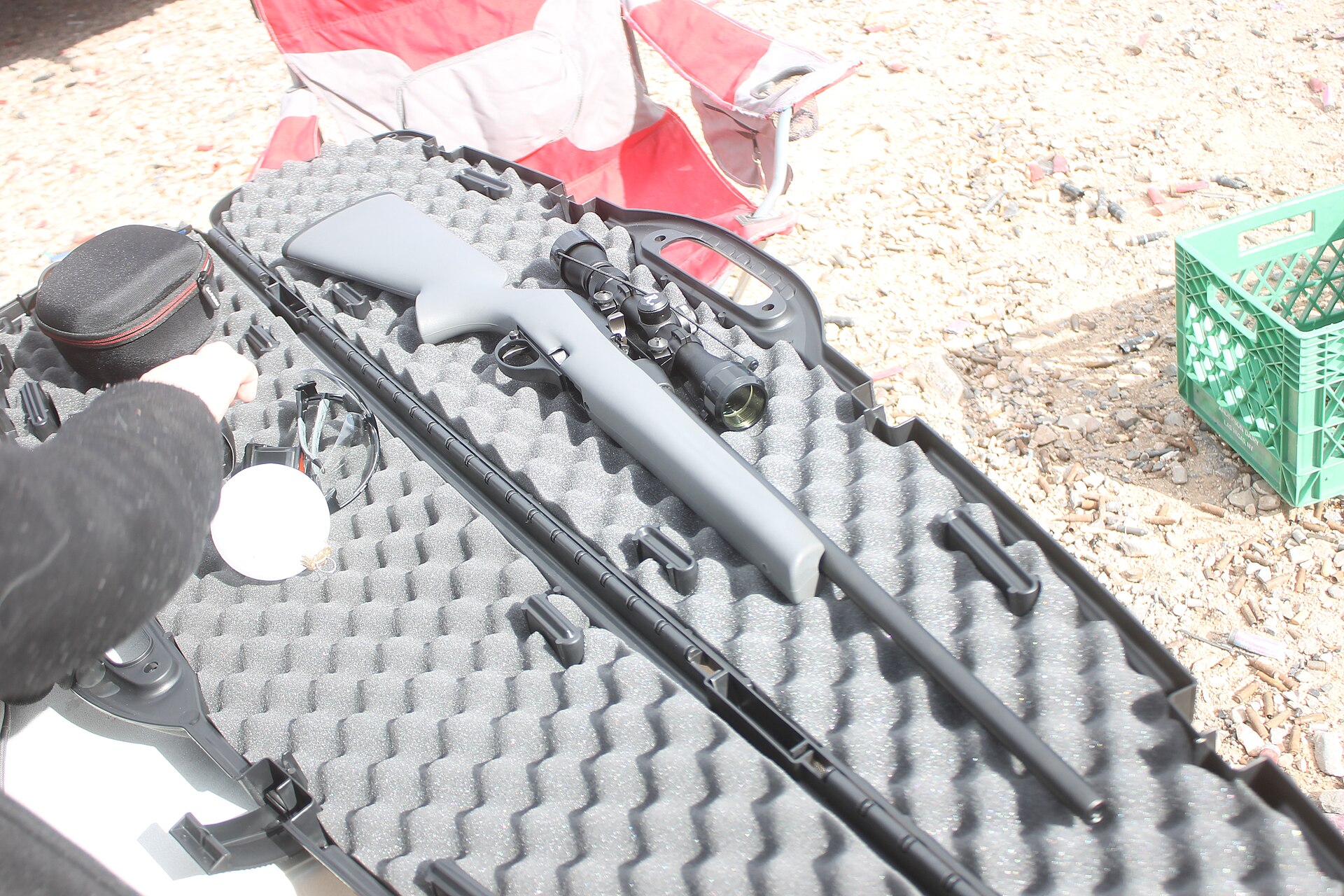
For most of its life the .17 HMR has been a bolt-action and single-shot cartridge. That is not an accident of fashion. The clearest manufacturer’s statement on the cartridge in a self-loading rifle, around 2009–2010, was an instruction to stop using both the ammunition and the rifle; Savage’s semi-automatic for it arrived in 2015, thirteen years after the cartridge, with a delayed action and a matched load.
This volume sets out what the primary record actually shows, corrects two things commonly said about it, and explains why the rifle documented here, a manually operated bolt action, is outside the problem entirely.
3.1.1 Two corrections before the history
The Savage A17 is a 2015 rifle, not a 2013 one. Savage’s launch page for the A17 quotes press coverage headed “Best Products of SHOT Show 2015”, and no page on savagearms.com with “a17” in its address was archived at any time in 2013 or 2014; the earliest model page capture is from March 2015.1 A 2013 date sometimes attached to the rifle may come from a different Savage event that year: ATK’s announced purchase of the company, on 13 May 2013 (Volume 1).
No A17 recall was found on Savage’s own pages. Savage’s recall page, as archived in August 2015, lists one rimfire recall: the B.MAG bolt, in .17 WSM. Savage’s safety page, as archived in 2019, lists the same.2 If an A17 service action exists, it is not on the maker’s recall pages that were consulted, and this dive does not assert one. The documented .17 HMR semi-automatic recall is Remington’s, and it is the subject of the next section.
3.1.2 The Remington notice
Remington’s safety-warning page carried a notice headed “17 HMR AMMUNITION AND MODEL 597® 17 HMR SEMI-AUTOMATIC”. Its core, verbatim:3
DO NOT USE REMINGTON 17 HMR AMMUNITION IN SEMI-AUTOMATIC FIREARMS. DO NOT USE THE REMINGTON MODEL 597 17 HMR SEMI-AUTOMATIC RIFLE. Remington has been notified by its supplier of 17 HMR ammunition that 17 HMR ammunition is not suitable for use in semi-automatic firearms. The use of this ammunition in a semi-automatic firearm could result in property damage or serious personal injury.
The remedy was a buy-back, not a fix. Remington offered a $10 coupon for each returned box of 50 Remington-branded 17 HMR cartridges, and for a returned Model 597 17 HMR a coupon toward a replacement Remington firearm: $200 for a synthetic-stocked rifle, $250 for a laminate. It told owners to “immediately stop using” the rifle.3
Four features of that notice matter more than its date.
- It came from the ammunition side. Remington did not say its rifle was defective. It said its supplier of 17 HMR ammunition had told it that the ammunition “is not suitable for use in semi-automatic firearms”, and withdrew the rifle “in light of the ammunition manufacturer’s notice”. The supplier is not named on the page, and it is not named here.
- It was general. The statement is about semi-automatic firearms, not about the 597. It applied, on its own terms, to any self-loader chambered for the cartridge.
- It was not a repair. There was no retrofit part and no inspection procedure; the rifle was taken back.
- Its date is not established. The page carries no date. The earliest capture of it in the Internet Archive is 17 January 2010, so the notice was public by then; when it was first posted could not be determined. The introduction date of the 597 in .17 HMR could not be confirmed from Remington’s own history page either, which as archived in 2010 lists only .22 LR and .22 WMR variants of the 597.4
3.1.3 Why a blowback action and this cartridge do not mix
Remington’s notice gives no mechanism. What follows is this dive’s explanation from the design of the two systems. It is reasoning, not a quoted finding, and it is labelled as such.
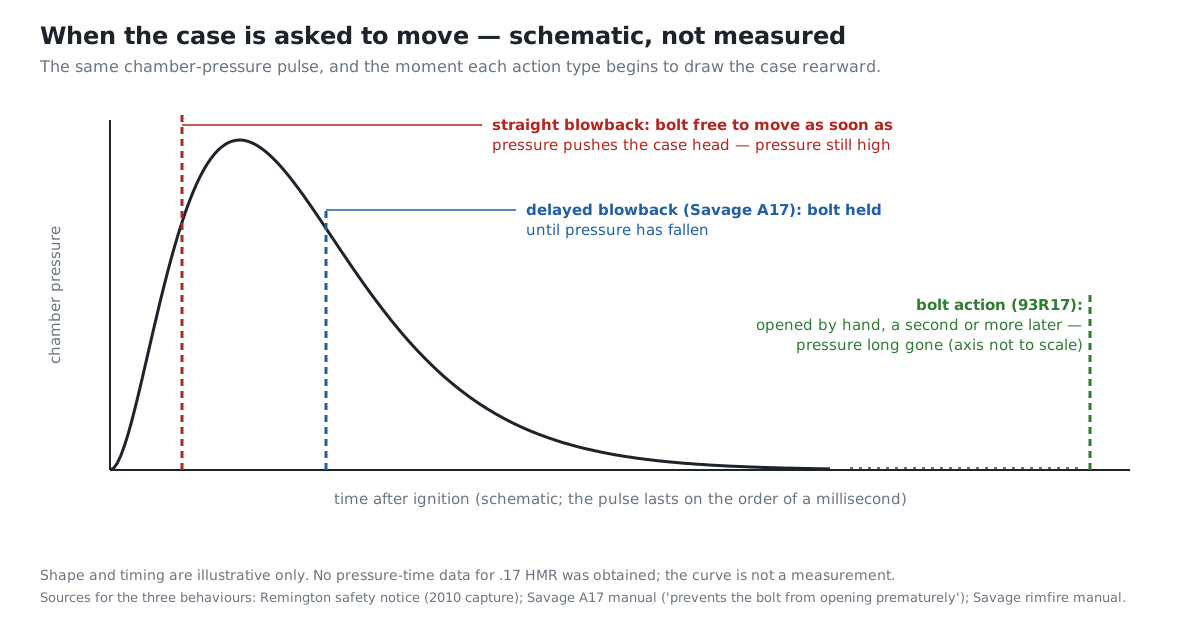
A straight-blowback action has no lock. Rimfire self-loaders are, as a class, blowback designs, which is why Savage advertised the A17’s delay as a feature (§3.4). In straight blowback the bolt is held against the case head only by its own mass and the recoil spring. When the cartridge fires, pressure drives the case head rearward against the bolt, and the bolt begins to move as soon as that force overcomes its inertia. The case therefore starts to leave the chamber while pressure inside it is still high. The design depends on the case walls and head holding together through that interval.
A rimfire case is the weakest possible case to ask that of. The case head is a thin, folded rim with the priming compound inside the fold, and the breech cannot enclose all of it: the extractor has to reach the rim, so at the extractor’s cut part of the rim is not backed by the barrel’s steel. The hub’s .22 Rimfire dive covers the construction. The .17 HMR asks that case to do more than any .22: it is the .22 WMR case, with a shoulder added and a bullet of roughly half the weight driven considerably faster (Volume 2).
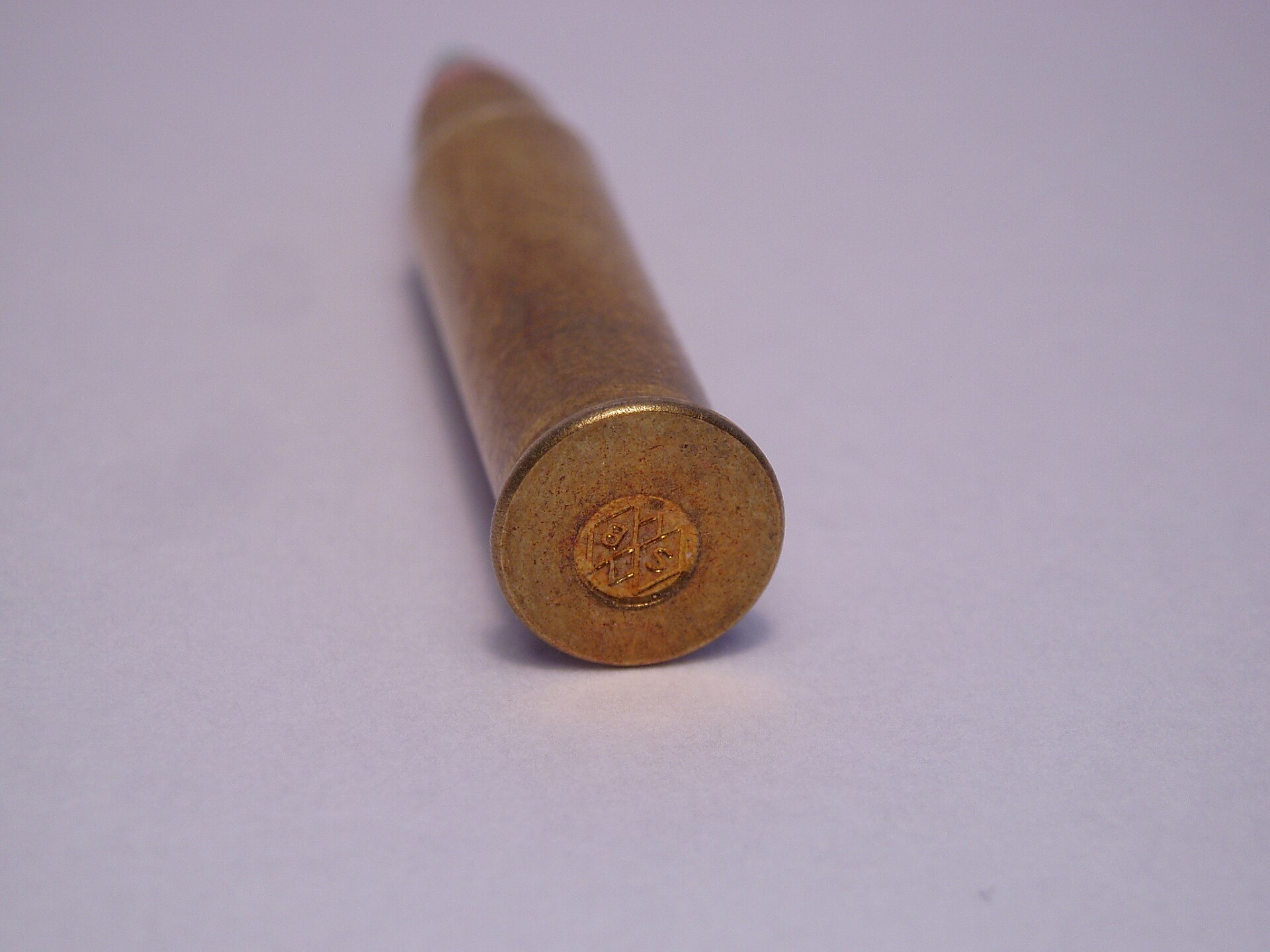
The failure the notice implies is the case letting go while the bolt is moving: a split, a separated head, or gas and powder residue vented rearward into the action. None of those specifics is stated in Remington’s notice; it says only “property damage or serious personal injury”. The timing figure below shows the principle without pretending to measure it.
3.1.4 Savage’s answer: delay the bolt, and match the load
Savage’s first semi-automatic .17 HMR addressed exactly the interval in that figure. Its launch page, archived in March 2015, leads with a “Delayed-Blowback Action Specifically Designed For High Performance Magnum Cartridges Chambered In 17 HMR”, with a hard-chromed bolt, a ten-round rotary magazine and the AccuTrigger.1 The A17 owner’s manual states the purpose in one clause: a “patent-pending delayed blowback action, which prevents the bolt from opening prematurely.”5
The ammunition was designed with the rifle. CCI says it “literally built this 17 HMR load around the A17 rifle from Savage Arms”, “optimized for feeding and function in the semi-automatic rifle”.6 Savage’s manual recommends it: “For optimal performance with your A17, use CCI A17 ammunition (designed specifically for the Savage A17).” It also asks the owner to keep the bolt lightly lubricated, to let the bolt snap forward rather than easing it, and to hold the trigger back after each shot until the action has fully cycled.5
Savage’s own FAQ, dated March 2015, takes a slightly broader line on ammunition: “The A17 will work with all 17 HMR ammunition. However, for best performance, we suggest CCI A17 ammo.”7
Set side by side, the two manufacturers’ statements trace the whole arc. Around 2009–2010, a supplier said no 17 HMR ammunition was suitable for semi-automatics, and a rifle was withdrawn. In 2015, a maker built a delayed action and said its rifle would work with all 17 HMR ammunition, best of all with a load made for it. The difference between the two positions is the delay.
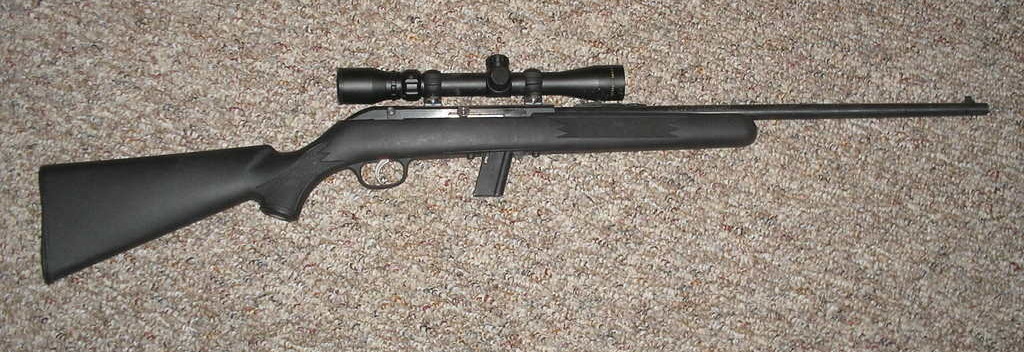
The Savage that did not need a delay. For contrast, Savage’s long-running .22 LR autoloader, the Model 64, advertises no delay at all; in the far gentler .22 LR it does not need one.
3.1.5 Why the bolt gun never had the problem
The rifle documented here opens only when a hand lifts the bolt handle. Savage’s manual describes the sequence: after firing, “Pull up and fully rearward on the bolt handle to open the bolt to extract the fired case.”8 Between the shot and that lift, the bolt is closed with its handle turned down into the receiver, and nothing in the mechanism allows it to move. By the time a shooter can physically lift the handle, the pressure pulse, which lasts on the order of a millisecond, is long over. Extraction happens with the case at rest, not in motion under pressure.
That is the whole difference, and it is why the 93R17 was never part of any of the history above. Any .17 HMR ammunition made to the standard is appropriate for the rifle, including the CCI A17 load, which simply fires as a fast 17-grain cartridge.
Two cautions keep that from becoming complacency.
- Case failure is not unique to self-loaders. Savage’s own manual for this rifle tells the owner what to do if “what appears to be gas pressure/residual powder” comes from the bolt area: “this may be what is known as ‘BLOW BACK’ … we recommend trying a different brand of ammunition”, and it adds that “wearing safety glasses will protect your eyes”.8 A bolt action removes the timing problem. It does not make a defective case safe, and eye protection is not optional with any rimfire.
- The one rimfire recall Savage has published concerns a bolt action. The B.MAG in .17 WSM was recalled because its bolt “may inadvertently catch the safety button and slide it forward into the ‘fire’ position”; the fix was a new bolt handle and a blunter bolt cap.2 That is not this rifle’s action. But Savage’s current manual for the Mark II and Model 93 carries the same check, in capitals, as the first item of routine maintenance: “BE SURE THE BOLT HANDLE OR CAP DOES NOT HIT THE SAFETY WHEN CLOSING THE BOLT.”8 It costs nothing to do, and Volume 5 puts it in the inspection routine.
3.1.6 What an owner takes from this
- Feed the 93R17 any factory .17 HMR. The semi-automatic problem does not reach a manually operated action.
- Do not reason from the A17 to other self-loaders. The A17 answer is a delay plus matched ammunition. A self-loader chambered for .17 HMR without an equivalent design is exactly the rifle Remington withdrew.
- Treat vented gas at the bolt as a stop signal. Savage’s instruction is to change ammunition; the hub’s practice is to stop, clear the rifle, and look at the case before firing again.
3.1.7 What could not be verified
- The issue date of Remington’s notice, and the identity of the ammunition supplier it cites.
- When the Model 597 was first offered in .17 HMR, and how many were sold.
- Whether other makers’ .17 HMR self-loaders of the period were withdrawn or modified. None was confirmed from a maker’s own page, so none is named.
- Any Savage recall, service bulletin or product change concerning the A17. None appears on Savage’s archived recall pages.
- Pressure-time data for .17 HMR, and SAAMI’s maximum average pressure for it. The timing figure is schematic for that reason.
3.1.8 Bibliography
Footnotes
-
Savage Arms, A17 launch page, savagearms.com/launch/a17/, as archived 12 March 2015; model page savagearms.com/firearms/model/A17, as archived 11 March 2015. Internet Archive CDX query for savagearms.com URLs containing “a17” between 2013 and 2014 returned no captures. ↩ ↩2
-
Savage Arms recall page, savagearms.com/recall, as archived 27 August 2015 (lists “BMag Bolt”); safety page savagearms.com/content?p=safety, as archived 19 July 2019; B.MAG recall notice savagearms.com/content?p=safety_notice_bmag, as archived 25 August 2019. ↩ ↩2
-
Remington Arms, “Safety Warning And Recall Notice — 17 HMR AMMUNITION AND MODEL 597® 17 HMR SEMI-AUTOMATIC”, remington.com/pages/news-and-resources/safety-center/safety-warning-recall-notice.aspx, as archived by the Internet Archive on 17 January 2010 (earliest capture; the page is undated). Quoted verbatim; coupon values as stated on the page. ↩ ↩2
-
Remington Arms, archived product-history page for the Model 597, remington.com/products/archived/rimfire/autoloading/model-597.aspx, as archived 12 April 2010 — calibres listed as 22 Long Rifle and 22 Win Mag only. ↩
-
Savage Arms, A17/A22 Magnum owner’s manual, savagearms.com/DAM/assets/pdf/Manuals/manual_a17_a22.pdf, as archived 19 December 2022 (PDF created January 2016). “Performance” section. ↩ ↩2
-
CCI, “A17 Tipped Varmint, 17 HMR, 17 Grain”, cci-ammunition.com/rimfire/cci/a17/6-949CC.html, accessed 2026-09-19. ↩
-
Savage Arms service FAQ, “What ammo do you recommend for my A17?” (214240003), dated 13 March 2015. ↩
-
Savage Arms rimfire bolt-action instruction manual (Mark I, Rascal, Mark II, Model 93, B.MAG), savagearms.com/DAM/assets/pdf/Manuals/manual_rimfire_boltaction.pdf, as archived 19 December 2022: §4 firing and the “blow back” caution; §14 maintenance. ↩ ↩2 ↩3
Comments (0)